


The practice of Excelerated Focus™ isn’t to maintain a single focus at all times. The skill is focusing on the right thing at the right time. It’s knowing where to focus right now.
“When you want to get something done, or you want to put your mind to something, time spent not focused on anything in particular feels like wasted time.” ~ Shunmyo Masuno
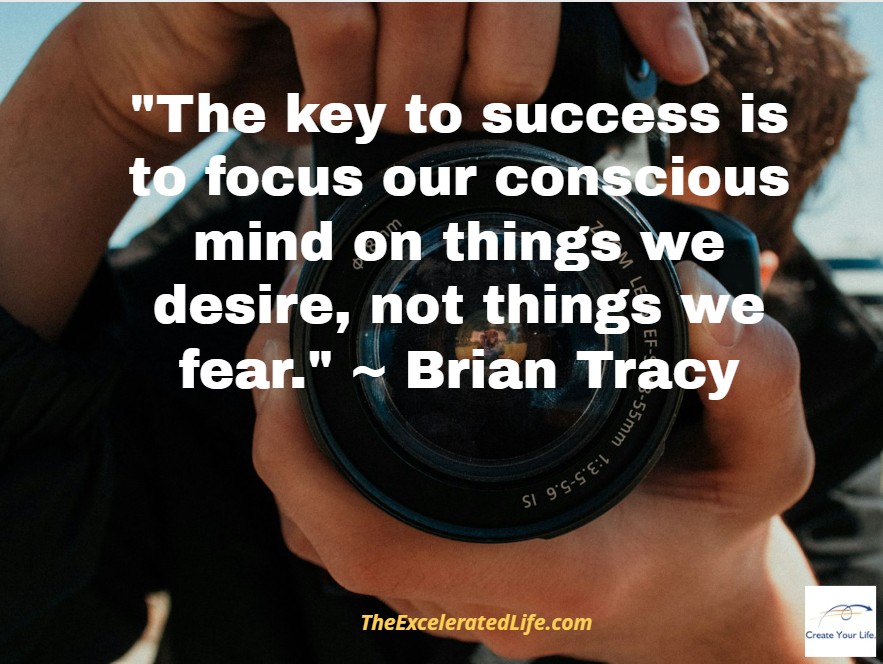
The Photographer
A few years ago, I watched a photographer at work in a local park. Families were everywhere. Children were playing on swings. Dogs chased Frisbees. People walked the trails. Birds darted among the trees. There was movement in every direction. The photographer stood quietly with his camera, surveying the scene. Then he lifted the camera to his eye and adjusted the lens.
Something interesting happened. The busy park didn’t disappear. The children were still laughing. The dogs were still running. The people were still walking. But through the viewfinder, only one thing was in focus. Everything else softened into the background.
The photographer wasn’t denying the existence of everything else. He wasn’t pretending the distractions weren’t there. He was simply deciding what mattered most in that moment.
That’s what focus does. Many of us think focus means eliminating every distraction. We imagine that if we could just find the perfect office, the perfect schedule, or the perfect amount of uninterrupted time, we’d finally be able to concentrate.
But life doesn’t work that way. The distractions don’t disappear. The emails still arrive. The phone still rings. The laundry still needs folding. The dog still wants to go outside. The challenge isn’t removing everything else from the picture. The challenge is deciding what deserves to be in focus right now. And that’s where many of us struggle.
Because there isn’t just one important thing competing for our attention. There are often dozens.
Family. Health. Work. Relationships. Church. Community. Personal goals. Household responsibilities.
Each one is worthy. Each one has a legitimate claim on our time and energy. The question isn’t, “What matters?” The question is: “What matters most right now?”
Just as the photographer adjusts the lens throughout the day to capture different subjects, we must continually adjust our focus as life changes. Focus is not a destination. It’s a practice. It’s the ongoing discipline of deciding where to direct your attention, energy, and effort in this moment.
And perhaps that’s why focus feels so difficult. Every time we focus on one thing, we’re choosing not to focus on something else. Yet that choice is exactly what makes focus powerful. Without focus, everything is equally important. When everything matters, nothing matters. And when everything is important, nothing receives the attention it deserves.
The photographer understands something we often forget: A great picture isn’t created by including everything. It’s created by knowing what belongs in the foreground. It’s deciding where to focus.
The Right Question at the Right Time
In order to decide where to focus, we must first understand – or decide – what is important to us at this time.
“The right question,” writes James E. Ryan, “asked at the right time, will open a door to something you don’t yet know, something you haven’t yet realized, or something you haven’t even considered.”
Before you can decide where to focus, you have to decide what is important for you at this time of day, at this point in the project, in this relationship, or at this season of life. Sometimes, your focus is on your BIG goals, sometimes it is on smaller areas.
To decide where to focus, ask this question: “What’s important now?” Where you put your focus may depend on a deadline, on your energy level, occasionally on someone else’s needs, or on your own routines. The important thing is to make the effort to choose where to focus. You can do that by asking the right question at the right time: “What’s important now?”
Clarity Comes From Action
You don’t have to make one grand decision that will guide your focus for the rest of your life or even the rest of your day. As we have seen many times, small actions, repeated over time, lead to major improvements.
They also lead to clarity if you stay mindful. You may realize that your choice of where to focus was not the best choice for this time. Don’t give up and don’t beat yourself up. Remember, it isn’t “win or lose”; it’s win or learn. When you pay attention, you learn how to better choose where to focus.
You don’t have to know your full life purpose in order to get started. You just need to start. Pick one area to focus on, based on what you know now, and then act. Your actions will help adjust your focus. Without action, it’s impossible to know if you are focused on the best things.
To help you understand where to put your focus, consider these three practices.
Specific Intentions, Flexible Methods
“Remember, momentum’s primary component is direction. First, you must know where you want to go.” ~ Stephen Guise
To know where to focus, you must decide where you want to go and what you want to do. You must choose a direction. Long-term goals are apt to change as people and circumstances change, but in order to know where to focus, you have to start with a goal and a plan. Be specific about your short-term intentions, but be flexible and open to shifting focus as conditions change.
Deliberate Strategy or Emergent Strategy
In deciding where to focus, we need a strategy. In his book How Will You Measure Your Life?, Clayton M. Christensen offers two strategies: Deliberate Strategy and Emergent Strategy.
When we have a goal and a plan in place and focus on following it, we are using a deliberate strategy. This is typically where we want to focus.
However, there are times when an opportunity arises that we didn’t anticipate. Sometimes that opportunity appears as an unexpected problem. When we choose to focus on this new path, we are using the emergent strategy. And if we decide to follow this new path, it becomes important that our emergent strategy becomes our new deliberate strategy. Otherwise, we risk diffusing our focus.
Our focusing strategy is made up of both deliberate and emergent strategies, and circumstances dictate which is the best one to follow.
Focus on the Process
When it comes to setting goals and knowing where to focus, remember it is usually more productive to focus not on the goal itself, the final outcome, but on the process we are following to reach our goals. Thomas M. Sterner describes an excellent method for doing this in The Practicing Mind. It’s called the DOC model: Do-Observe-Correct. Here’s how it works.
Do. Take the action. Show up. Execute the practice.
Observe. Watch yourself objectively. Without emotion. Without drama. Simply notice.
Correct. Adjust calmly. Bring yourself back on track. Continue.
The power of DOC helps you know whether you are focusing on the important things and, if not, allows you to change your focus.
Actions
The Focus Excelerator™ offers 100 small practices you can use to decide where to focus and to sharpen it. You can download your free copy here.
To get you started, here are the 10 sections of the Excelerator, each with one example step.
Clarify What Matters
o Write your top three priorities for today.
Focus on the Present Moment
o Focus on one activity at a time.
Manage Distractions
o Remove one recurring distraction.
Single-Tasking
o Focus on one project.
Protect Your Attention
o Create a technology-free hour.
Focus Through Simplicity
o Streamline a routine.
Focus on Relationships
o Put away your phone during a conversation.
Focus on Meaningful Work
o Begin with your most important task.
Reflect and Refocus
o Ask: What deserves more focus?
Live Intentionally
o Start the day with purpose.
The Things That Matter
“The whole of our lives can turn on the hinges of such minuscule events as they accumulate over time. Each choice against our sense of truth, no matter how trivial, makes us more likely to self-sabotage.” ~ Martha Beck
Remember, the photographer didn’t point the camera at one thing and refuse to adjust all day. The photographer continually changed focus depending on the subject.
The skill we are building isn’t to maintain one focus. The skill is focusing on the right thing at the right time. To build this skill, use the Three Focus Questions:
What matters most in my life?
What matters most today?
What matters most right now?
Question #1 changes slowly.
Question #2 changes daily.
Question #3 may change several times throughout the day.
Confusion often occurs when we mix these levels together. We try to answer a “right now” question with a life-purpose answer, or we treat a temporary priority as though it were a lifelong value. The three focus questions help us match our attention to the proper horizon.
We can remain deeply committed to our values, purpose, and goals while changing our focus throughout the day as circumstances require. In fact, that’s often what wisdom looks like. It’s how you embrace your Excelerated Life™!
What is demanding your attention right now, and what truly deserves your attention?
What is one thing you need to move into the foreground of your life this week?
Share your thoughts by leaving a comment below.
Excelerated Focus™ — aligning your actions with your true desires — is one practice for creating your Excelerated Life™, a life of flourishing and well-being, and a life of meaning, purpose, and service.
Read more about the Excelerated Life™.
Resources:
Beck, Martha. The Way Of Integrity. New York: Penguin Books, 2021.
Christensen, Clayton M. How Will You Measure Your Life? New York: HarperCollins Publishers Inc., 2012.
Guise, Stephen. The Magic of Momentum. Selective Entertainment, LLC. 2022.
Johnson, Cheryl K. Box Lunch Lifestyle. Marine on St. Croix, MN: Traction Books, 2022.
Masuno, Shunmyo. The Art of Simple Living. New York: Penguin Life Books, an imprint of Penguin Random House LLC, 2009.
Ryan, James E. Wait, What? And Life’s Other Essential Questions. New York: HarperCollins Publishers Inc., 2017.
Sterner, Thomas M. The Practicing Mind: Developing Focus and Discipline in Your Life. Novato, CA: New World Library, 2005, 2012.
This blog post includes research findings and suggestions from ChatGPT, an AI language model developed by OpenAI. The content was generated with AI assistance and is intended to provide information and guidance. Please note that the suggestions are not official statements from OpenAI. To learn more about ChatGPT and its capabilities, you can visit the OpenAI website.
(Please NOTE: The material in this document is intended for informational and educational purposes only and is not a substitute for professional advice in medical, psychological, legal, or financial matters. The purpose of this article is to educate and inspire. Following the techniques, suggestions, or strategies presented does not guarantee success.)