

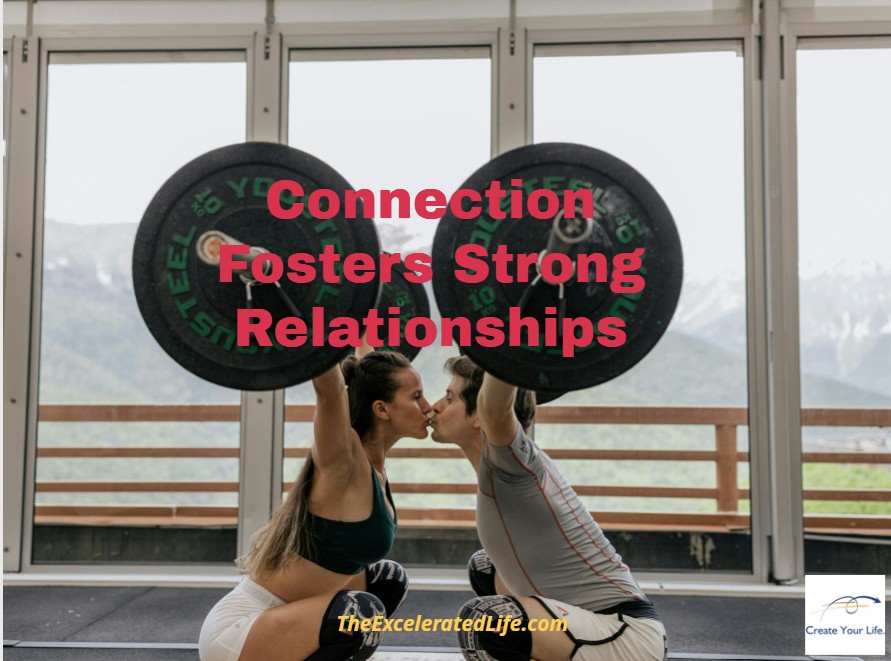
Strong relationships aren’t built by grand gestures. They’re built by small, repeatable choices.
[Title Photo by Anastasia Shuraeva]
The Art of Connection: How Better Relationships Are Built
Most of us want better relationships. Deeper conversations. More understanding. Less friction. More trust.
And yet, many of us feel oddly stuck. We talk more than ever—texts, emails, social posts—but feel less connected. We’re busy, distracted, and often rushing from one interaction to the next without really being there.
That’s why Michael J. Gelb’s book The Art of Connection is a helpful companion to Excelerated Relationships™. Gelb doesn’t treat connection as a matter of chemistry, luck, or personality. He treats it as an art, something you practice deliberately, imperfectly, and daily.
That perspective matters. Because relationships don’t usually break down from lack of caring. They break down due to a lack of presence, curiosity, listening, and empathy.
Excelerated Relationships™ begin the same way Gelb’s work does: by changing how we show up
Connection Is an Art, Not a Trait
One of Gelb’s most liberating insights is this: connection isn’t reserved for extroverts, charmers, or “people persons.” It’s not something you either have or don’t have. It’s something you practice.
Connection grows out of:
- attention
- curiosity
- empathy
- intention
In other words, connection is less about who you are and more about how you relate. Flourishing relationships aren’t accidental. They are built slowly, consciously, and with care.
Presence Is the Foundation of Connection
If there is one skill that sits at the center of every healthy relationship, it’s presence.
Gelb emphasizes what many of us already sense: distraction is the silent relationship killer. When we are half-present, checking phones, rehearsing responses, thinking about what’s next, we may be physically there, but relationally absent.
Presence communicates something powerful: You matter. You are worth my attention.
Excelerated Relationships™ treat presence as a daily practice:
- putting devices down during conversations
- slowing your responses
- listening without planning your reply
A simple reflection: Where am I physically present but emotionally elsewhere?
Often, the most healing thing we can offer another person is our undivided attention.
Curiosity Builds Bridges
Curiosity is one of the most underused relational skills. It opens doors that judgment slams shut. It transforms conversations from debates into explorations.
When curiosity is present:
- assumptions soften
- defensiveness lowers
- understanding grows
With curiosity, we can replace the need to be right with the desire to understand.
Try this shift: Instead of asking, “How do I explain myself better?” Ask, “What might I not yet understand?”
A helpful reflection: Am I trying to understand—or trying to be understood?
Curiosity doesn’t mean agreement. It means openness. And openness is where connection begins.
Listening Is an Act of Generosity
Most of us were never taught how to listen. We were taught how to speak, persuade, and explain, but not how to truly receive another person.
Deep listening is a gift. To be heard — really heard — is profoundly validating.
Often, people don’t need solutions. They need safety. In Excelerated Relationships™, listening is not fixing, advising, or correcting. It’s about creating space.
A simple but challenging practice:
- listen without interrupting
- listen without correcting
- listen without preparing advice
A reflection to consider: Who in my life needs to be heard, not helped?
Listening generously strengthens trust faster than almost anything else.
Empathy Creates Emotional Safety
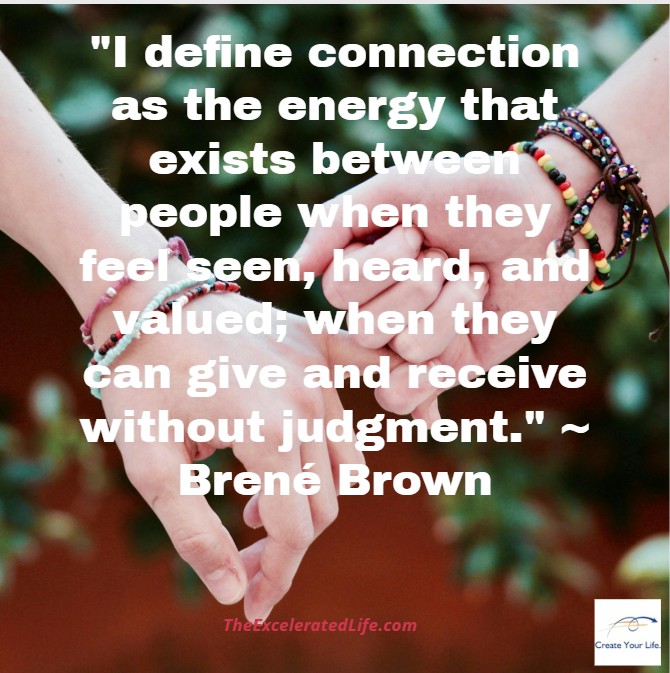
Gelb draws an important distinction that fits beautifully with Excelerated Acceptance™: empathy is not agreement. You can understand someone’s feelings without endorsing their behavior. You can validate emotion without surrendering your values.
Empathy sounds like:
- “I can see why that mattered to you.”
- “That makes sense given what you were dealing with.”
These statements don’t solve the problem, but they change the relational climate.
Excelerated Relationships™ rely on emotional safety. Without it, honesty disappears. With it, growth becomes possible.
A reflection worth sitting with: Where could empathy soften a stuck relationship?
Often, empathy does more to heal than logic ever could.
Connection Requires Practice, Not Perfection
One of the most encouraging themes in Gelb’s work is his emphasis on practice. Connection doesn’t come from getting it right every time. It comes by showing up again and again.
Small moments matter:
- checking in
- expressing appreciation
- repairing quickly after missteps
- apologizing without defensiveness
Excelerated Relationships™ are built through relational habits, not grand gestures.
A simple question: What small relational habit would make the biggest difference right now?
Consistency builds trust. Trust deepens connection. And connection makes relationships resilient.
The Quiet Cost of Disconnection
Disconnection doesn’t usually announce itself loudly. It grows quietly in the absence of attention.
It shows up as:
- misunderstandings
- emotional distance
- resentment
- fatigue
When connection fades, people don’t always leave. But they disengage. The Excelerated Relationships™ practice addresses this early, before distance becomes damage.
Putting the Art of Connection into Practice
You don’t need to overhaul your relationships to improve them. Start small. Try one or two of these this week:
- Have one conversation with full presence.
- Ask one genuinely curious question.
- Listen once without offering advice.
- Express one specific appreciation.
These are not dramatic actions. But they are powerful. Connection grows where intention lives.
A Way of Living, Not a Technique
The Excelerated Relationships™ practice is not a strategy you deploy when things go wrong. It is a way of relating to people, daily. Imperfectly. Intentionally.
As Michael J. Gelb reminds us, connection is an art. And like any art, it’s learned through practice, patience, and humility. We don’t need better people. We need better ways of relating. And that begins when we slow down, show up, and choose connection, one interaction at a time.
Strong relationships aren’t built by grand gestures. They’re built by small, repeatable choices: moments of presence, humility, curiosity, and care. Exceleration doesn’t mean rushing. It means choosing wisely, again and again and again. For that’s how you embrace your Excelerated Life™!
What helps you feel most connected to others?
Which relational skill do you want to practice this week?
Share your ideas by leaving a post below.
Developing Excelerated Relationships™ — nurturing ties to other people — is one practice for creating your Excelerated Life™, a life of flourishing and well-being, and a life of meaning, purpose, and service.
Read more about the Excelerated Life™.
Resources
Gelb, Michael J. The Art of Connection: 7 Relationship-Building Skills Every Leader Needs Now. New World Library, 2017.
This blog post includes research information and suggestions provided by ChatGPT, an AI language model developed by OpenAI. The content was generated with AI assistance and is intended to provide information and guidance. Please note that the suggestions are not official statements from OpenAI. To learn more about ChatGPT and its capabilities, you can visit the OpenAI website.