

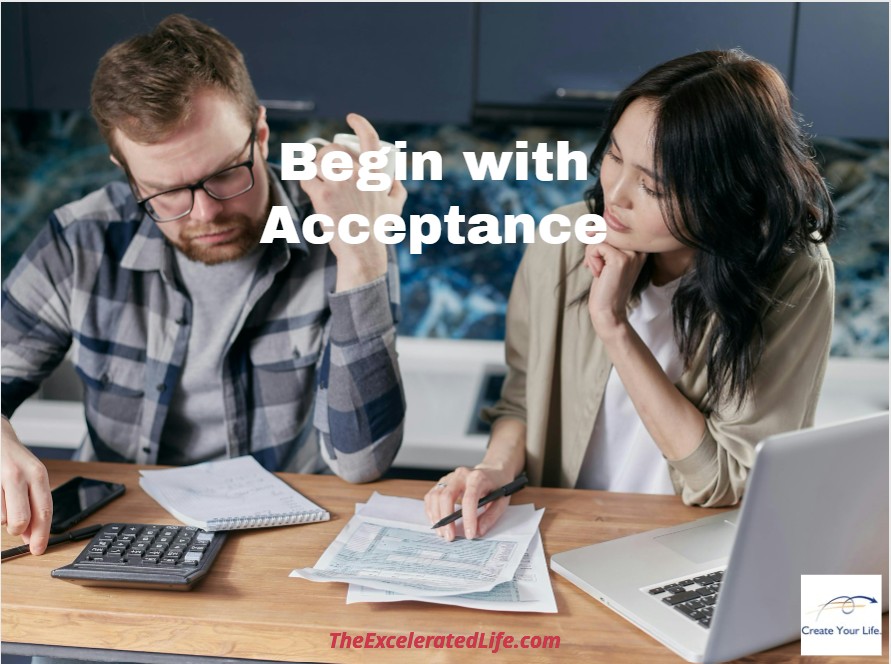
Acceptance is not the end of action — it’s the beginning of wise action. When you begin with acceptance, you stop resisting reality, and you free your strength to shape what comes next.
[Title Photo by Mikhail Nilov]
The First Step
“We can fix the problem, change how we feel about the problem, do nothing and remain miserable, or accept the problem.” — Stephanie Fallon
Acceptance doesn’t usually get top billing in the world of self-development. Action does. Motivation does. Change does. But nobody wakes up thinking, “You know what I’m excited about today? Accepting reality!”
Yet it’s the cornerstone of all growth. In fact, one of the most powerful spiritual and psychological insights you’ll ever practice is this:
Begin with acceptance.
Not because reality is always pleasant. Not because everything that happens is okay. But because acceptance is the first step toward mental peace, emotional resilience, and wise action.
When you fight reality, reality always wins. And you pay the price. But when you accept reality, you win…and your next step becomes clear.
What Acceptance Really Means
Acceptance is simply this: Recognizing your present circumstances as they are — without burying them, resisting them, or wishing them away.
It’s saying, “This is happening,” instead of “This shouldn’t be happening.” It’s noticing what you’re feeling rather than forcing yourself to feel something else. It’s acknowledging the truth without decorating it or ducking from it.
There are two ways out of any difficult moment:
- Accept what’s happening, recognize the positive, and choose a peaceful state of mind, or
- Fight against it, dwell in misery, and struggle against the universe.
Most of us try Option #2 first. It rarely ends well.
Acceptance won’t magically solve every situation, but it gives you the clarity, emotional stability, and wisdom required to respond well.
What Acceptance Is Not
Let’s clear away a common misunderstanding: acceptance is not surrender.
It is NOT:
- Approval. You don’t have to like what’s happening.
- Resignation. This isn’t throwing your hands in the air and doing nothing.
- Toleration. It’s not gritting your teeth and pretending everything’s fine.
- Weakness. Acceptance takes courage. It takes honesty. It takes guts to face reality directly.
Acceptance isn’t passive. It’s purposeful. It’s stepping into the truth with open eyes, open hands, and an open heart — and letting that truth guide your next action.
The Four A’s of Acceptance
Acceptance and Commitment Therapy (ACT) offers a simple but powerful framework for dealing with unwanted emotions: Acknowledge, Allow, Accommodate, Appreciate. [Harris]
Let’s break those down.
- Acknowledge
Name what you’re feeling. “This is anxiety.” “This is grief.” “This is disappointment.”
Naming an emotion reduces its intensity and pulls you out of reactive mode.
- Allow
Let the feeling be there without trying to fix it, push it away, or shame yourself for it.
You’re simply allowing; not indulging, not feeding, not fighting.
- Accommodate
Make room for the feeling. This means noticing where it lives in your body, letting it move through, and breathing around it.
It’s the emotional version of pulling up an extra chair at the table and saying, “It’s okay, you can sit here for a while.”
- Appreciate
This one surprises people, but it’s essential: your emotions have evolved for good reasons.
Even painful emotions serve a purpose:
- Motivation: Anger energizes us to protect what matters.
- Illumination: Sadness reveals what we value.
- Communication: Fear signals that something feels unsafe.
When you appreciate the message behind the emotion, you gain clarity about your values and about the next right step.
How Acceptance Actually Works
Here’s why acceptance is transformative:
- Struggling amplifies pain.
When you resist sadness, frustration, or anxiety, the emotions usually grow louder. Acceptance reduces the “secondary suffering”: the stress, shame, or guilt attached to the emotion itself.
- Resistance drains your energy.
Trying to control the uncontrollable is exhausting. Acceptance frees up precious energy you need for the things you can influence.
- Acceptance opens the door to wisdom and clarity.
You cannot take wise action from a place of denial, anger, or frantic trying. Acceptance grounds you in the truth — the only place from which wise decisions can be made.
- Acceptance strengthens self-compassion.
When you accept your flaws, limitations, mistakes, and uncertainties without judgment, your inner resilience grows. You stop fighting yourself and start guiding yourself.
- Acceptance reveals values.
Your emotions often point to what matters most:
Sadness says, “This mattered.”
Anger says, “This is important.”
Fear says, “I don’t want to lose something meaningful.”
Acceptance helps you translate emotion into purposeful action.
Why Acceptance Is So Hard
Let’s not sugarcoat it: acceptance often feels like the harder path.
Why?
- Because it means facing grief, fear, or uncertainty head-on.
- Because it challenges deeply held beliefs like “This shouldn’t have happened” or “I can’t handle this.”
- Because it requires emotional honesty, and honesty is uncomfortable.
Avoidance feels easier in the short term. Acceptance feels better in the long term.
And remember:
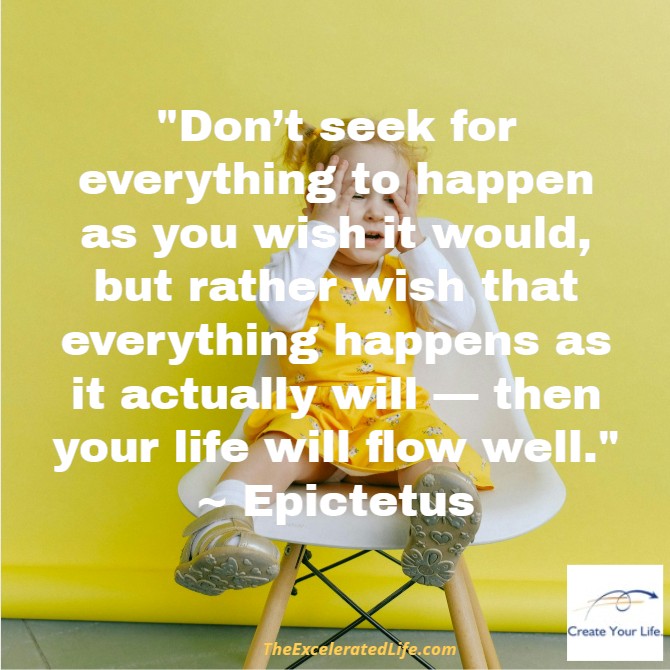
Not accepting reality doesn’t change reality — it just increases your suffering.
A Simple Way to Practice Acceptance
You don’t have to master radical acceptance overnight. Start small. Start gently. But start now.
Here’s a simple practice [Calm]:
Step 1: Name what’s happening.
“This is grief.”
“This is overwhelm.”
“This is me wishing things were different.”
Naming the truth helps your brain shift out of reactivity.
Step 2: Allow the feeling.
Let the emotion breathe. You don’t need to fix it or force it away.
Step 3: Notice your stories.
Ask: “Is this story true? Is it helpful? What else might be possible?”
This step alone can dissolve half the suffering.
Step 4: Use the Both/And approach.
“I’m scared and I can take the next step.”
“I’m hurt and I’m capable of healing.”
“I’m overwhelmed and I’m still moving forward.”
Acceptance makes room for complexity. And for compassion.
Step 5: Pause the problem-solving.
Not every feeling is a problem. Sometimes acceptance looks like taking a breath instead of taking action.
Step 6: Engage your senses.
Ground yourself in the present moment through sights, sounds, touch, scent, or taste. This returns you to now, the only moment where acceptance is possible.
Step 7: Ask what support looks like.
“What do I need right now?”
“What kind of care would help me?”
Sometimes acceptance is calling a friend. Sometimes it’s resting. Sometimes it’s crying.
Step 8: Focus on what you can control.
You can’t change the past. You can’t control other people. You can choose your next action.
Step 9: Practice acceptance in low-stakes moments.
Start with:
- traffic,
- bad weather,
- long lines,
- delays,
- small everyday disappointments.
These small reps build emotional muscle for the bigger moments.
Everyday Examples of Acceptance in Action
Acceptance isn’t abstract. It shows up in ordinary moments.
Stuck in Traffic
Resistance: anger, honking, stress.
Acceptance: “I’m in traffic, and I can’t change that. I can choose how to use this moment.”
Unwanted Feedback at Work
Resistance: defensiveness and self-criticism.
Acceptance: “This is feedback. I can sift for value without attacking myself.”
Bad Weather
Resistance: frustration and complaining.
Acceptance: “It’s raining. I’m disappointed and I can choose another meaningful activity.”
A Friend’s Annoying Habit
Resistance: irritation and attempts to control.
Acceptance: “This is part of who they are. I can adjust my expectations.”
A Family Member’s Deeply Held Beliefs
Resistance: trying to convince or argue.
Acceptance: “We see things differently. I can choose boundaries and peace.”
Personal Flaws or Imperfections
Resistance: shame or harsh self-criticism.
Acceptance: “This is part of my humanity. I can learn and grow.”
In each scenario, acceptance doesn’t remove the challenge; it removes the extra suffering we add to it.
Excelerated Acceptance™ in the Excelerated Life™ Framework
In the Excelerated Life™, acceptance isn’t passive. It’s an intentional step toward clarity, wisdom, and aligned action.
Acceptance:
- helps you respond rather than react,
- supports emotional resilience,
- strengthens your ability to make progress on goals,
- and aligns you with your values.
It’s the foundation beneath Excelerated Movement™, Excelerated Positivity™, Excelerated Relationships™, and every other practice.
Why?
Because you cannot transform what you refuse to acknowledge.
A Few Gentle Reminders
- Acceptance is a practice, not a personality trait.
- You won’t do it perfectly (and perfection isn’t the goal).
- Acceptance creates space. And in that space, wisdom arrives.
- Acceptance softens your inner landscape so growth has room to take root.
- Acceptance is courage in action.
Call to Action
This week, try practicing Excelerated Acceptance™ in one small, everyday moment: traffic, waiting, unexpected delays, minor irritations.
Pause.
Name what’s happening.
Take a breath.
Allow it to be what it is.
Then choose your next step with clarity instead of reactivity.
Acceptance is not the end of action — it’s the beginning of wise action. When you stop resisting reality, you free your strength to shape what comes next. And that is one step in embracing your Excelerated Life™!
What’s one emotion you’ve been resisting that you could gently allow today?
How might acceptance open a door to a wiser response?
Share your ideas by leaving a post below.
Excelerated Acceptance™ – identifying and accepting the things you are struggling with — is one practice for creating your Excelerated Life™, a life of flourishing and well-being, and a life of meaning, purpose, and service.
Read more about the Excelerated Life™
Resources:
Calm Editors. “What is acceptance? Plus, 9 tips to help you learn to let go.” Calm. Calm.com,. Web. November 29,2025.
https://www.calm.com/blog/what-is-acceptance
Harris, Russ. “The ‘Four A’s’ of Acceptance.” PDFfile.
https://www.providence.org/-/media/project/psjh/providence/or/files/act-group-handouts/the-four-as-of-acceptance.pdf
This blog post includes research information and suggestions provided by ChatGPT, an AI language model developed by OpenAI. The content was generated with AI assistance and is intended to provide information and guidance. Please note that the suggestions are not official statements from OpenAI. To learn more about ChatGPT and its capabilities, you can visit the OpenAI website.
This blog post includes research from Google AI.