

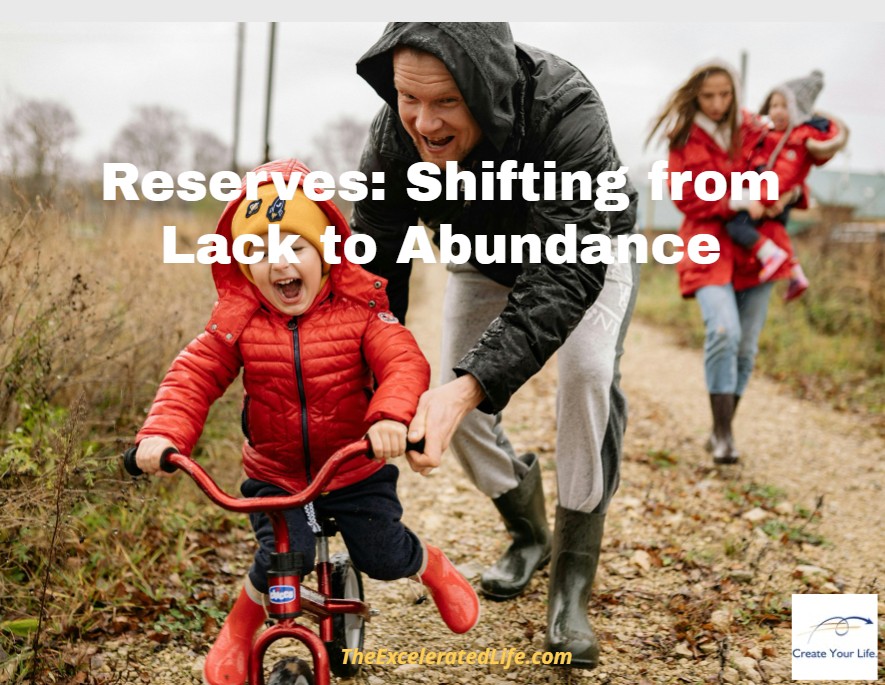
Once you shift from lack to abundance, you experience the stability of margin, the calm of preparedness, and the confidence of capacity. You stop living on the edge, and you start living from abundance.
Running on Empty
Karen lived in a constant state of “almost.”
Almost enough time.
Almost enough money.
Almost enough energy.
Her calendar was packed. Her checking account hovered near zero at the end of every month. Her pantry was either overflowing with random items or completely missing the one thing she needed. Her email inbox felt like a swarm. Her mind did too.
Karen wasn’t irresponsible. She worked hard. She cared deeply. She tried. But she had no margin.
When the car needed repairs, panic.
When a meeting ran long, resentment.
When a child got sick, chaos.
Every inconvenience felt like a crisis because there was no reserve to absorb the shock. Karen didn’t think of herself as living in scarcity. But she was living on the edge of empty — and that’s where scarcity thinking thrives. And it was exhausting.
Living from Scarcity
When you’re constantly worried and running on empty, it takes a toll, not just on your efficiency, decision-making, and performance but also on your overall well-being.
Scarcity is more than a financial condition. It’s a mental posture. Living from scarcity focuses on limitations, competition, and the fear that “there isn’t enough.” It produces anxiety and a subtle win-lose mentality. If someone else gets ahead, there must be less for me.
A scarcity mindset teaches us that there’s a limited supply of good stuff in the world — time, money, success, opportunity — and that everything we want must come at someone else’s expense. It elevates competition over collaboration. Hoarding over sharing. Reactivity over reflection.
When you live from scarcity:
- You rush instead of plan.
- You react instead of respond.
- You hoard instead of trust.
- You guard instead of give.
Scarcity doesn’t just drain resources. It drains joy. Scarcity shrinks your thinking. It narrows your vision. It keeps you in survival mode. And survival mode is not where flourishing happens.
The Hidden Cost of Running on Empty
When you operate without reserves:
- Every decision feels urgent.
- Every expense feels threatening.
- Every interruption feels offensive.
- Every opportunity feels risky.
You become more defensive than creative. More reactive than intentional. And here’s the deeper issue: when you have no reserve, you have no room for generosity. You cannot give freely when you are clinging tightly.
Scarcity thinking feeds itself. The more you feel you lack, the more you focus on what you lack. And what you focus on expands.
Living from Abundance
Abundance thinking is not naïve optimism. It’s not denial of reality. It is a shift in orientation. An abundance mindset understands that life is not a zero-sum game. Your joy does not require someone else’s loss. There is more than enough opportunity, creativity, connection, and contribution to go around.
Living from abundance focuses on:
- Possibility over limitation.
- Collaboration over competition.
- Creation over comparison.
- Win-win over win-lose.
Abundance does not ignore constraints. It simply refuses to let constraints define identity.
When you live from abundance:
- You think long-term.
- You invest instead of consume.
- You build instead of scramble.
- You trust that effort multiplies.
Abundance expands your vision. It frees your thinking. It encourages contribution. Here’s the critical insight: Abundance thinking becomes sustainable when it is supported by reserves.
Building Reserves: The Practical Path to Abundance
Abundance is easier to believe when you are not running on fumes. Reserves create margin. Margin creates calm. Calm creates clarity. The Excelerated Reserves™ practice is not about excess. It is about stability.
A reserve is anything you deliberately maintain beyond immediate need.
- A time reserve.
- A cash reserve.
- A space reserve.
- A supply reserve.
- An emotional reserve.
Reserves transform emergencies into inconveniences. They let you respond rather than react.
How Reserves Shift Us from Lack to Abundance
When you build reserves, something powerful happens psychologically. You move from “What if something goes wrong?” to “If something goes wrong, I can handle it.”
That shift is enormous.
Time Reserves
Leaving space in your calendar.
Not booking every hour.
Building margin into deadlines.
Time reserves reduce urgency and increase thoughtfulness.
Cash Reserves
An emergency fund.
A buffer in your checking account.
Savings for the unexpected.
Cash reserves reduce fear and increase freedom.
Space Reserves
Empty shelves.
Clear surfaces.
Unused room.
Space reserves reduce stress and increase creativity.
Supply Reserves
Backup essentials.
Preparedness without hoarding.
Supply reserves reduce panic and increase stability.
Emotional Reserves
Rest.
Reflection.
Healthy boundaries.
Emotional reserves reduce reactivity and increase compassion.
Reserves do not eliminate difficulty. They absorb it. And when difficulty no longer feels catastrophic, abundance becomes believable.
How to Start Building Reserves
You don’t need to overhaul your life to begin. Start small.
- Build a Time Buffer
Add 15 minutes between appointments.
Leave one evening per week unscheduled. - Build a Financial Cushion
Start with $100.
Then $500.
Then one month of expenses.
Slow, steady, consistent. - Clear Physical Margin
Empty one drawer.
Clear one surface.
Create one pocket of breathing room. - Reduce Commitments
Say no once this week.
Protect your energy. - Practice Emotional Margin
Sleep.
Pause.
Journal.
Breathe before responding.
Reserves grow like savings accounts. Slowly at first. Then steadily. Remember compounding? Reserves compound too.
Returning to Karen
Karen didn’t change her life overnight. She started by building a small cash buffer. Then she stopped scheduling meetings back-to-back. She cleared one shelf in her pantry and committed to keeping it half empty. She said no to one obligation she had outgrown.
The changes felt small. But something subtle shifted.
When the next unexpected expense came, she didn’t panic. When a meeting ran long, she had breathing room. When her child got sick, she had margin. And for the first time in years, she felt something unfamiliar: Calm.
Not because life became predictable. But because she had built capacity. Karen didn’t just gain reserves. She gained confidence. And confidence is the soil where abundance grows.
How to Start
This week, choose one area:
- Time
- Cash
- Space
- Supplies
- Emotional energy
Build one small reserve in that area. One small margin. And notice how differently you think when you are no longer running on empty.
From Lack to Abundance
Scarcity is not only about what you lack. It’s about how you live when you lack margin.
Abundance is not about excess. It’s about living from strength instead of strain.
Excelerated Reserves™ are not a luxury. They are wisdom.
You build reserves not out of fear of the future, but because you respect it. You build reserves not because there isn’t enough, but because you believe you can create more. And once you experience the stability of margin, the calm of preparedness, and the confidence of capacity, something shifts permanently. You stop living on the edge. You start living from abundance. And you start embracing your Excelerated Life™!
Where in your life do you most need a reserve right now — time, cash, space, or emotional energy?
What would change if you stopped living on the edge of empty?
Share your experience by leaving a comment below.
Excelerated Reserves™ — moving from scarcity to abundance — is one practice for creating your Excelerated Life™, a life of flourishing and well-being, and a life of meaning, purpose, and service.
Read more about the Excelerated Life™.
Resources:
Leonard, Thomas. The 28 Laws Of Attraction. New York: Scribner, 1998.
Miedaner, Talane. Coach Yourself To Success. Lincolnwood, IL: Contemporary Books, 2000.
This blog post includes research information and suggestions provided by ChatGPT, an AI language model developed by OpenAI. The content was generated with AI assistance and is intended to provide information and guidance. Please note that the suggestions are not official statements from OpenAI. To learn more about ChatGPT and its capabilities, you can visit the OpenAI website.