

Excelerated Productivity™ — improving efficiency and effectiveness — isn’t just knowing what to do. It also requires that you know what to leave out.
[Title Photo by Willfried Wende]
What Not to Do
“There is nothing so useless as doing efficiently that which should not be done at all.” ~ Peter Drucker
There’s a story about the sculptor, Michelangelo, who was asked how he created the beautiful statue of David. Legend has it that he replied: “I simply chip away everything that isn’t David.” Whether he said it or not, that statement is also a key to productivity. Sometimes, our productivity isn’t improved by adding more tasks or streamlining our systems. Sometimes, it’s simply knowing what to leave out.
Excelerated Productivity™ — improving efficiency and effectiveness — isn’t just about knowing what to do or doing things right. It also requires that you know what to leave out; that you do the right things. . . and ignore the wrong ones. That often means letting go of tasks, habits, or priorities that seem important on the surface but actually distract you from your purpose.
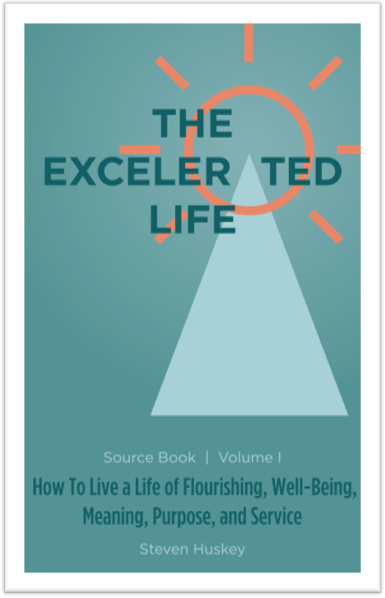
The problem is, we sometimes confuse productivity with busyness. But if your days are packed with activities that don’t move the needle or get you closer to your goals, you’re not being productive. You’re just busy.
Let’s explore why true productivity matters, what it’s not, and how knowing what to leave out can dramatically increase your effectiveness, energy, and sense of purpose.
Why Be Productive?
We all want to feel accomplished, capable, and on track. But productivity has nothing to do with chasing hustle for its own sake — it’s to help you achieve meaningful outcomes in less time, with less stress. When you focus on what matters and drop what doesn’t, you create space for deeper satisfaction and well-being.
Here are a few key benefits of genuine productivity:
- Accomplishment and Forward Momentum – Real productivity is deeply satisfying. You finish tasks that matter. You build things. You see progress. That sense of forward motion fuels your motivation and energy.
- More Done in Less Time – Effective productivity strategies help you get more done with less effort. You learn to batch tasks, focus your attention, and eliminate distractions — all of which lead to greater efficiency.
- Improved Well-being and Purpose – When you’re clear on what matters most, your daily actions become aligned with your values and goals. That alignment leads to a greater sense of meaning, fulfillment, and happiness.
- Enhanced Self-Esteem and Confidence – Finishing meaningful work, especially the hard things, builds your confidence. You trust yourself more. You start seeing yourself as someone who follows through and gets things done.
- Better Time Management – The more productive you are, the more intentional you become with your time. Instead of reacting to your to-do list, you learn to prioritize and act deliberately.
- Greater Flexibility and Freedom – When you manage your time well and avoid time-wasters, you free up space for the things you love — hobbies, relaxation, quality time with family and friends.
- Increased Creativity – A cluttered schedule suffocates creativity. But when you have time to think, to dream, to reflect, creativity flourishes. True productivity creates space for innovation.
What Productivity Is Not
If you’ve ever ended the day feeling exhausted but unsure of what you actually accomplished, you’re not alone. That’s often the result of mistaking busyness for productivity.
Here’s what real productivity is not.
- It’s not busywork, tasks that make you feel active but don’t move you forward.
- It’s not responding to other people’s priorities or constantly reacting to others’ needs without protecting your own agenda.
- It’s not Quadrant IV tasks. These are activities that are neither urgent nor important — mindless scrolling, unnecessary meetings, or fussing with unimportant details.
- And it’s not some Quadrant III tasks. These may feel urgent because others are pressing you, but they’re not truly important to your goals.
If your day is filled with these kinds of activities, even if you check off every box, you’re not progressing. You’re spinning your wheels.
Know What to Leave Out
The key to Excelerated Productivity™ is not just doing a lot of things well. It’s doing the right things and dropping the rest.
Leaving things out can be hard, especially when those things are familiar or when they serve someone else’s agenda. But each time you say “no” to something unimportant, you’re saying “yes” to what matters most.
Let’s look at how to get clear about what to leave out.
Prioritize Ruthlessly
One of the most powerful questions you can ask yourself is:
“What’s important now?”
Your priorities will shift throughout the day, based on context, energy, and time. That’s why David Allen’s Getting Things Done method encourages you to consider:
- Context: What can you do where you are, with the tools you have?
- Available Time: How much time do you have before your next commitment?
- Energy Level: Are you in a high- or low-energy phase of your day? (Tip: Pay attention to your ultradian rhythms — the 90–120-minute cycles of peaks and troughs throughout the day.)
- Priority: After considering the above, what’s the most important thing you could do right now?
Let’s say you have a list of tasks and 90 minutes before your next appointment. Your energy is high because it’s early in the day. Choose the highest-impact task that requires focus and will move you closer to a meaningful goal. Save lighter or routine tasks (like responding to e-mails) for when your energy dips.
Adopt a Fixed-Volume Productivity Approach
Oliver Burkeman, author of Four Thousand Weeks, recommends adopting a “fixed volume” approach to productivity. That means setting a hard limit on how many tasks you focus on at any given time.
Burkeman suggests keeping two lists:
- The “3 Things” List: These are your top three priorities for the day. You don’t add anything new until one is completed or removed.
- The “Everything Else” List: A holding space for ideas, requests, or less urgent tasks.
This forces you to focus. It protects you from overcommitting and diluting your attention.
Do One Thing at a Time
Multitasking is a myth. While you can juggle several tasks in succession, you can’t do them all well at the same time. Context switching drains your mental energy and slows your progress.
Instead, choose one project — or one work and one personal project — and stick with it until completion. That’s the only way to create momentum and see real results.
Think of it this way:
1000 steps in random directions don’t get you far.
1000 steps in one direction take you somewhere.
Practice Strategic Underachievement
This counterintuitive idea also comes from Burkeman. Strategic underachievement means deciding ahead of time what you’re willing to neglect — and then being okay with it.
You can’t do everything. And trying to do everything leads to mediocrity across the board.
Maybe your house won’t be spotless this week. Or maybe you won’t attend every meeting. Maybe you’ll deliver a “B+” effort in some areas so you can give “A+” energy where it matters most.
Letting go of perfection in low-priority areas allows you to excel where it counts.
Learn to Subtract
Leidy Klotz, in his book Subtract, shows how humans instinctively try to improve things by adding – more features, more commitments, more goals. But often, the best improvements come from removing things.
Ask yourself: What could I remove from my day, my week, my work, or even my expectations to make space for what matters most?
Klotz’s research reminds us: Subtraction is a powerful and often overlooked strategy for improvement.
Actions You Can Take
Here are a few small steps you can take this week to put these ideas into practice:
- Audit your to-do list. Which tasks are truly necessary? Which are someone else’s priorities? Which are Quadrant IV time-wasters?
- Try the “3 Things” approach. Choose your three most important tasks each day. Stick to them.
- Track your energy. Notice when you feel most alert and focused. Schedule deep work during those times.
- Pick one project. Choose one important goal or initiative and work on it until it’s done before you start another.
- Let go of one thing. Identify one task, expectation, or responsibility you can release this week. How does that feel?
The Space to Do What Matters
Productivity isn’t just doing more — it’s doing less better.
It’s knowing what to leave out so you can give your best attention, energy, and creativity to what truly matters.
Busyness is easy. Distraction is everywhere. But focus — real, meaningful, intentional focus — is rare and powerful.
So the next time your to-do list feels overwhelming, don’t ask, “What else can I do?”
Ask instead:
“What can I leave out?”
Because sometimes the best way to move forward… is to let go.
This week, take 10 minutes to look at your commitments. What’s one thing — a task, a project, or even a belief — that you could subtract to improve your focus and productivity?
Try it. Feel the difference. And keep moving forward, one clear, intentional step at a time. Now you’re on the path to embracing your Excelerated Life™!
Are your days productive or simply busy?
What is one thing you could leave out to become more productive?
Share your experience by leaving a comment below.
Excelerated Productivity™ — improving efficiency and effectiveness — is one practice for creating your Excelerated ILife™, a life of flourishing and well-being, and a life of meaning, purpose, and service.
Read more about the Excelerated Life™.
Resources:
Allen, David. Getting Things Done (Revised Edition). New York: Penguin Books, 2015.
Burkeman, Oliver. Four Thousand Weeks: Time Management For Mortals. New York: Farrar, Straus and Giroux, 2021.
Klotz, Leidy. Subtract: The Untapped Science of Less. New York: Flatiron Books, 2021.
This blog post includes research information and suggestions provided by ChatGPT, an AI language model developed by OpenAI. The content was generated with AI assistance and is intended to provide information and guidance. Please note that the suggestions are not official statements from OpenAI. To learn more about ChatGPT and its capabilities, you can visit the OpenAI website.