

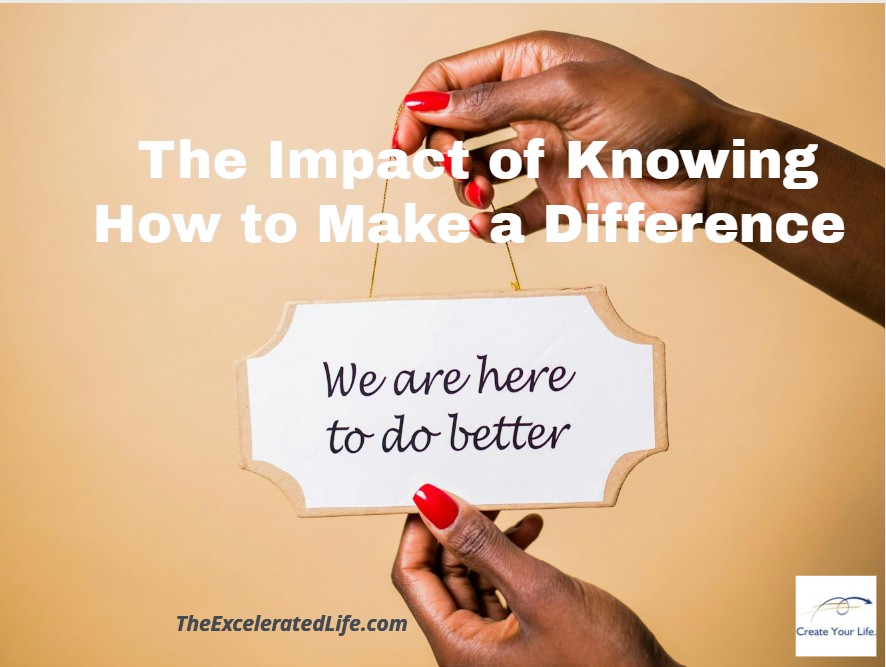
Achievement without contribution feels empty. Contribution without integrity feels exhausting. But when purpose, action, and service align, life becomes quietly triumphant.
[Title Photo by RDNE Stock Project]
A Story About Giving More Than You Take
Tom was good at setting goals. Very good. He planned carefully, worked hard, and usually achieved what he set out to do. Promotions came. Projects landed. Boxes got checked. From the outside, it looked like success.
But somewhere along the way, something felt off. His days were full, yet oddly hollow. Conversations revolved around deadlines and deliverables. Wins felt shorter-lived than they used to. And even when he reached his goals, the satisfaction faded faster than he expected.
One afternoon, after finishing a project he’d worked toward for months, Tom caught himself thinking, “Is this it?”
Around that same time, a colleague asked him for help, nothing dramatic, just guidance on a problem Tom had already solved. Tom hesitated. He was busy. Tired. Focused on his own next objective. But he said yes.
They talked for twenty minutes. Tom shared what he’d learned, what he’d tried, what he’d gotten wrong. The colleague left relieved and encouraged. And Tom noticed something unexpected: he felt lighter. More energized than he had all day.
That small moment stayed with him. Tom began to notice a pattern. The moments that felt most meaningful weren’t the ones where he advanced his own agenda, but the ones where his effort made things easier for someone else. Where his experience helped another person move forward.
It wasn’t that goals didn’t matter. They did. But goals pursued only for personal gain left him empty. Goals tied to contribution — helping, serving, giving back — felt different. They felt alive.
That’s when Tom began to understand a simple but powerful truth: A life well lived isn’t just about what you achieve. It’s about what you contribute along the way.
And that insight sits at the heart of Excelerated Contribution™ — achieving meaningful objectives while giving back more than you take.
Fulfillment Comes From Contribution (Not Accumulation)
Most of us were taught, explicitly or implicitly, that success means getting ahead. We set goals. We achieve milestones. We accumulate rewards. Yet, many people achieve those goals and feel an unexpected emptiness. The achievement lands, the moment passes, and something inside quietly asks, “Is this really what I was aiming for?”
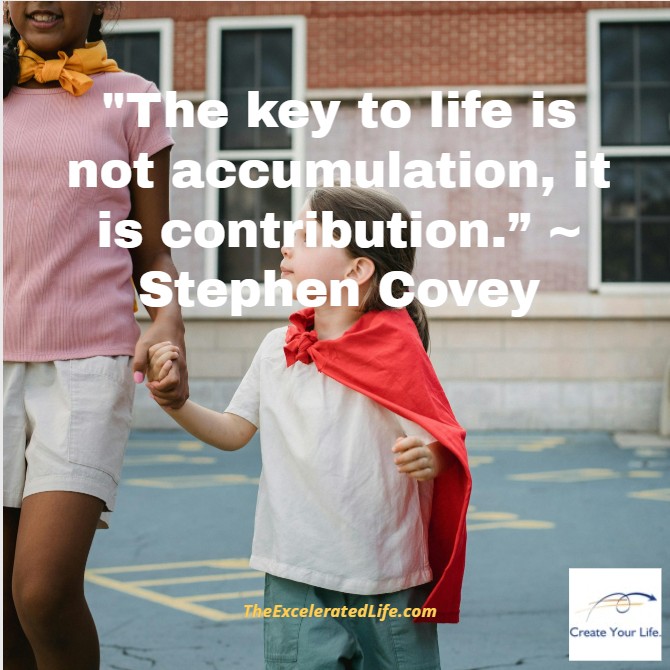
But let’s begin with a different premise: A meaningful life isn’t measured by what you acquire. It’s measured by what you contribute.
Not someday. Not after you “make it.” But along the way. Every day.
Contribution Is the Source of Fulfillment
In The Courage to Be Disliked, Ichiro Kishimi and Fumitake Koga, drawing on Alfred Adler’s psychology, make a bold claim: Happiness is the feeling of contribution. Not approval. Not recognition. Not achievement for its own sake.
Adler argued that we are not pushed forward by our past or by external pressure. We are pulled by chosen purposes. And the most life-giving purpose we can choose is to be useful to others. You don’t need to wait for a bigger platform or a better title to contribute. Contribution isn’t about scale; it’s about orientation, which direction your effort is pointed.
A simple daily practice makes this real: “Today I’ll contribute by _____ to benefit _____.”
That one sentence shifts your entire day from extraction to service.
Give More Than You Take
Glenn Clark’s reflections on Walter Russell in The Man Who Tapped the Secrets of the Universe distill contribution into a simple, uncompromising principle: Give more than you take.
Russell believed that life rewards those who become “net creators of value”. Contribution is not self-sacrifice; it’s alignment with how life actually works. Abundance flows toward those who solve real problems generously.
Excelerated Contribution™ adopts this as a guiding ethic:
- Don’t aim to break even.
- Don’t aim to “get yours.”
- Aim to leave things better than you found them.
A practical way to live this out: Pick one stakeholder you serve today and overdeliver by 10%, in speed, quality, care, or thoughtfulness.
That small surplus of generosity compounds faster than ambition alone ever could.
Redefining Success
In True Success, Tom Morris reframes success not as acquisition, but as contribution aligned with integrity.
He describes four integrities:
- Purpose – why you do what you do
- Thought – how you frame situations
- Character – who you are becoming
- Action – what you actually do
True success emerges when all four point toward serving others.
This concept removes the false divide between achievement and service. You don’t have to choose between doing well and doing good. When your work contributes, both happen together.
Morris offers a wonderfully practical prompt: “How can I best contribute right now?
And then — this is key — act within three minutes on the clearest answer.
Contribution is not a philosophy you admire. It’s a response you make.
From Passion to Contribution
Tom Rath’s Life’s Great Question challenges one of the most common pieces of advice in modern culture: “follow your passion.” Rath suggests a better question: “How can I contribute?”
Passion often follows contribution, not the other way around. Meaning grows when we apply our strengths to problems that matter. Excelerated Contribution™ builds on this by inviting you to identify your contribution strengths, the ways you most naturally help others, and design your days around them.
A simple practice: Name your #1 contribution strength. Schedule 1–2 hours to deploy it on your most consequential problem today.
This turns contribution from a vague intention into a concrete design choice.
Contribution Without Attachment
One of the most liberating ideas from The Courage to Be Disliked is the separation of tasks.
Your task is to contribute. Others’ reactions are their task. This frees you from:
- needing approval,
- managing others’ opinions,
- keeping score.
Excelerated Contribution™ is not performative. It’s not about praise or recognition. It’s about integrity, doing your part because it’s yours to do. When you contribute without attachment, you gain something rare: quiet confidence and inner freedom.
A Daily Practice of Excelerated Contribution™
You don’t need to overhaul your life to live this practice. Start here:
- Name today’s contribution.
“Today I’ll contribute by _____ to benefit _____.” - Give a little more than required.
Overdeliver by 10% where it matters. - Use your strengths in service.
Design time around how you help best. - Separate tasks.
Offer your best effort. Release the outcome. - Act quickly.
Contribution delayed is often contribution denied.
Small, consistent acts of contribution reshape how work feels, how goals land, and how life satisfies.
How To Make a Difference
Excelerated Contribution™ reminds us of something we already know but often forget: You don’t find meaning by chasing it. You experience meaning by giving yourself away wisely.
Achievement without contribution feels empty. Contribution without integrity feels exhausting. But when purpose, action, and service align, life becomes quietly triumphant.
So ask yourself today, not someday: “How can I best contribute right now?” Then act.
That is how you achieve meaningful objectives while giving back more than you take. That is how you embrace your Excelerated Life™!
Will achieving your BIG goal contribute to a better world?
If not, what could you change to make it so?
Share your ideas by leaving a post below.
Excelerated Contribution™ — achieving meaningful objectives while giving back more than you take — is one practice for creating your Excelerated Life™, a life of flourishing and well-being, and a life of meaning, purpose, and service.
Read more about the Excelerated Life™.
Resources:
Burg, B., & Mann, J. D. (2007). The go-giver: A little story about a powerful business idea. Portfolio.
Clark, G. (1946). The man who tapped the secrets of the universe. University of Science and Philosophy.
Grant, A. (2013). Give and take: A revolutionary approach to success. Viking, Penguin Group.
Kishimi, I., & Koga, F. (2018). The courage to be disliked: The Japanese phenomenon that shows you how to change your life and achieve real happiness. Atria Books.
Morris, T. (1994). True Success: A new philosophy of excellence. G.P. Putnam’s Sons.
Smith, J. D. (2023). Life’s great questions: Searching for meaning in a modern world. Wisdom Press.
This blog post includes research information and suggestions provided by ChatGPT, an AI language model developed by OpenAI. The content was generated with AI assistance and is intended to provide information and guidance. Please note that the suggestions are not official statements from OpenAI. To learn more about ChatGPT and its capabilities, you can visit the OpenAI website.