
When dealing with the law of cause and effect, it makes little sense to blame or curse the effect. The cause may or may not be under your control, but the cause renders the effect inevitable. What we do have control of — even though we may not realize it in every instance — is our response to the effect.
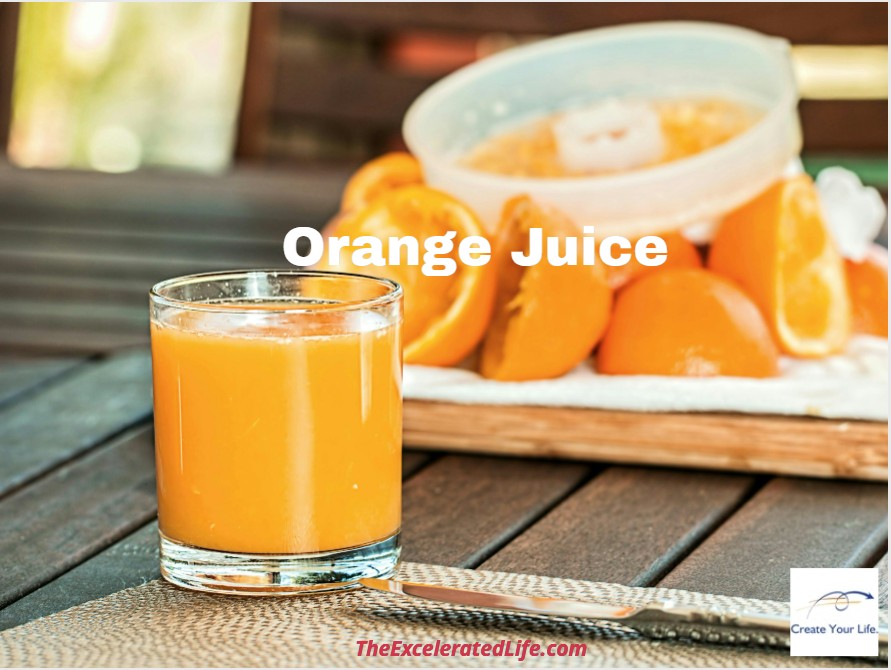
What do you get when you squeeze an orange? Here’s a story from the late Dr. Wayne Dyer that illustrates.
“‘I was preparing to speak . . . and I decided to bring an orange on stage with me as a prop for my lecture. I opened a conversation with a bright young fellow of about twelve who was sitting in the front row.
‘If I were to squeeze this orange as hard as I could, what would come out?’ I asked him.
He looked at me like I was a little crazy and said, ‘Juice, of course.’
‘Do you think apple juice could come out of it?’
‘No!’ he laughed.
‘What about grapefruit juice?’
‘No!’
‘What would come out of it?’
‘Orange juice, of course.’
‘Why? Why when you squeeze an orange does orange juice come out?’
He may have been getting a little exasperated with me at this point. ‘Well, it’s an orange and that’s what’s inside.’
I nodded. ‘Let’s assume that this orange isn’t an orange, but it’s you. And someone squeezes you, puts pressure on you, says something you don’t like, offends you. And out of you comes anger, hatred, bitterness, fear. Why? The answer, as our young friend has told us, is because that’s what’s inside.'”
What comes out of you when you are under pressure, feeling squeezed? Bitterness, anger, fear? Or love, understanding, compassion?
As I have begun to study Stoic philosophy, this appears to be one of the primary tenets; at least, it’s one I have seen discussed again and again: It isn’t what happens to us that is important, it’s how we react, or respond, to what happens.
From the philosopher / Emperor, Marcus Aurelius: “If you are distressed by anything external, the pain is not due to the thing itself but to your own estimate of it; and this you have the power to revoke at any moment.”
From Epictetus, a slave who gained his freedom and became one of the major Stoic philosophers: “Men are disturbed not by the things which happen, but by the opinions about the things: for example, death is nothing terrible, for if it were, it would have seemed so to Socrates; for the opinion about death, that it is terrible, is the terrible thing. When then we are impeded or disturbed or grieved, let us never blame others, but ourselves, that is, our opinions. It is the act of an ill-instructed man to blame others for his own bad condition; it is the act of one who has begun to be instructed, to lay the blame on himself; and of one whose instruction is completed, neither to blame another, nor himself.”
And this isn’t only a Stoic principle. This is from The Diamond Cutter, by Michael Roach, an American Buddhist monk: “. . . nothing that ever happens to us is a good thing or a bad thing from its own side, because — if it were — then everyone else would experience it that way as well. For example, our irritating person at work would strike everyone else in exactly the same way, if his or her ‘irritating-ness’ were something inside that was flowing out of that individual and flying across the room to us. In reality, though, there is almost always someone who finds the person good and lovable.”
No event, nothing that occurs, is inherently “good” or “bad” . . . if it were, it would be the same to everyone. But this is obviously not the case. The storm that floods one area brings needed rain to another. The enlightened ones – those whose “instruction is completed” — do not blame (or credit) anyone, including themselves, for the things that happen “to” them. It comes back to the law of cause and effect. It makes little sense to blame or curse the effect. The cause may or may not be under your control but the cause renders the effect inevitable. What we do have control of — even though we may not realize it in every instance — is our response to the effect.
I hope this hasn’t been too heavy-handed but it is important. What comes out of you when you get squeezed — just as orange juice comes from the orange — is what is inside of you. And what is inside of you is entirely under your control.
You can choose to harbor anger and fear, or you can choose to harbor Light and Love. Choose Light. That is Excelerating!
Identifying and accepting the things you are struggling with is one step in creating your Excelerated Life™, a life of well-being, meaning, and purpose.